

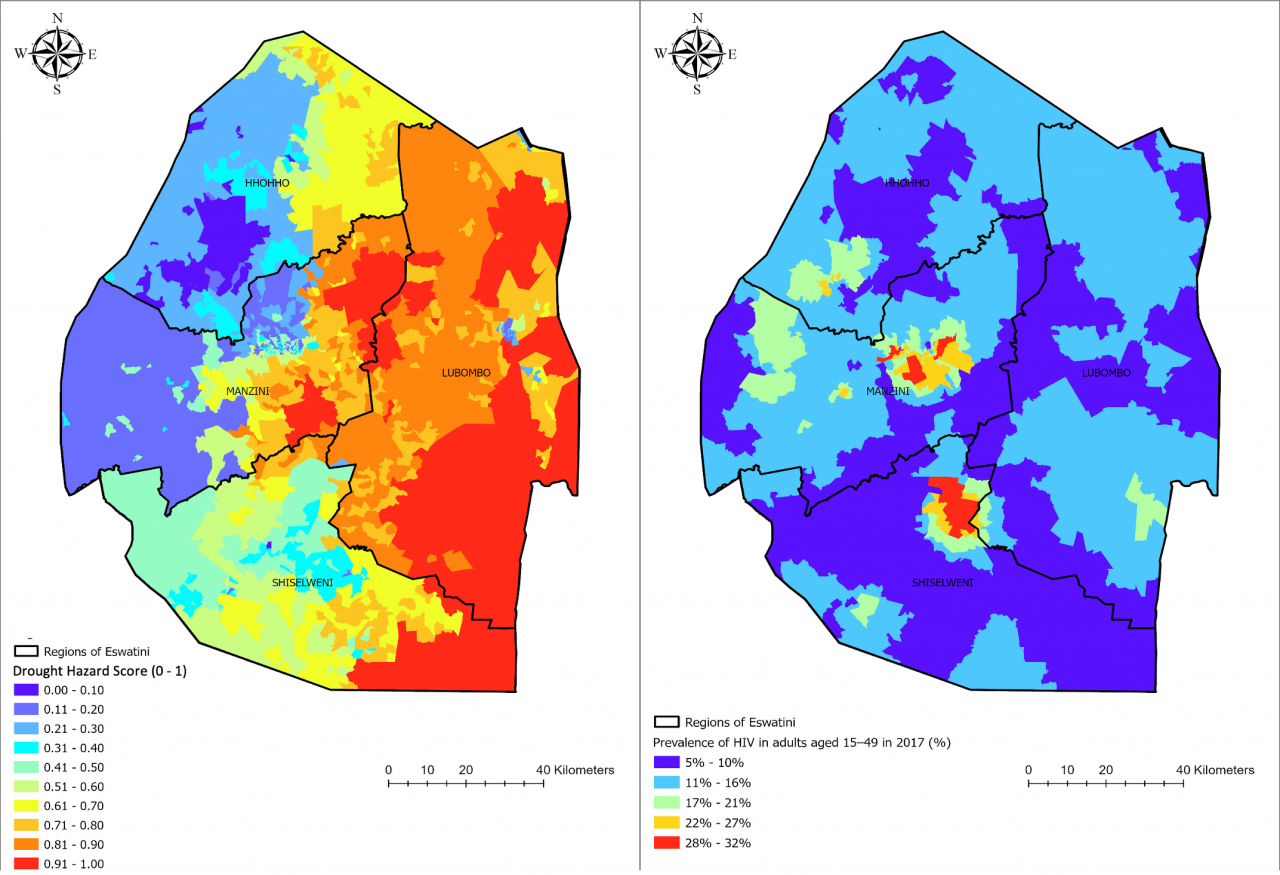
Despite Africa’s minimal contribution to greenhouse gas emissions, climate change disproportionately harms African health through direct impacts and by amplifying underlying vulnerabilities. Climate hazards across Africa—including increases in heat waves, droughts, floods, and tropical cyclones—have contributed to food insecurity, water scarcity, health crises, economic disruption, and displacement. The HEAT Lab investigates the complex relationship between climate and health in the context of Eswatini, South Africa, and Kenya. This work includes exploring the impacts of climate hazards on HIV/TB transmission and care, the health and well-being of sugarcane farmers, children’s food security, and informal settlements. We team up with local partners to understand the climate-related health issues and to co-develop and assess potential climate adaptation strategies.
Select Projects
Siyakhula: Growing HIV/TB research knowledge for growing healthy kids in Eswatini
Community heat mapping campaign in Nairobi, Kenya (2025)
Select Publications
Mkhatshwa, N. P., Dlamini, W. M., LaBeaud, A. D., Mandalakas, A. M., & Lanza, K. (2024). HIV in Eswatini: Climate Change Impacts and Adaptation Strategies. Current tropical medicine reports, 11(3), 143-152. https://doi.org/10.1007/s40475-024-00325-z
Research Areas
- Heat-Safe Youth Physical Activity Promotion
- Active Transportation Environments
- Climate Change, Health, and Adaptation in Africa
- Nature-Based Volunteering and Youth Health